
A student gets her period unexpectedly during the school day. She checks her bag, realises she has no sanitary pad, and wonders whom to ask. The problem may be straightforward to solve, but embarrassment, uncertainty, or an unavailable staff member can make it harder.
For school administrators, this situation raises an important question: are menstrual products accessible when students need them?
A vending machine may be part of the answer. However, purchasing equipment does not automatically create dependable access. When comparing Sanitary Napkin Vending Machine Manufacturers for Schools, consider the student’s experience alongside specifications, costs, and maintenance.
This guide from Nature Care Solutions explains how schools can assess equipment and prepare a practical operating plan before installation.
What Is a Sanitary Napkin Vending Machine for Schools?
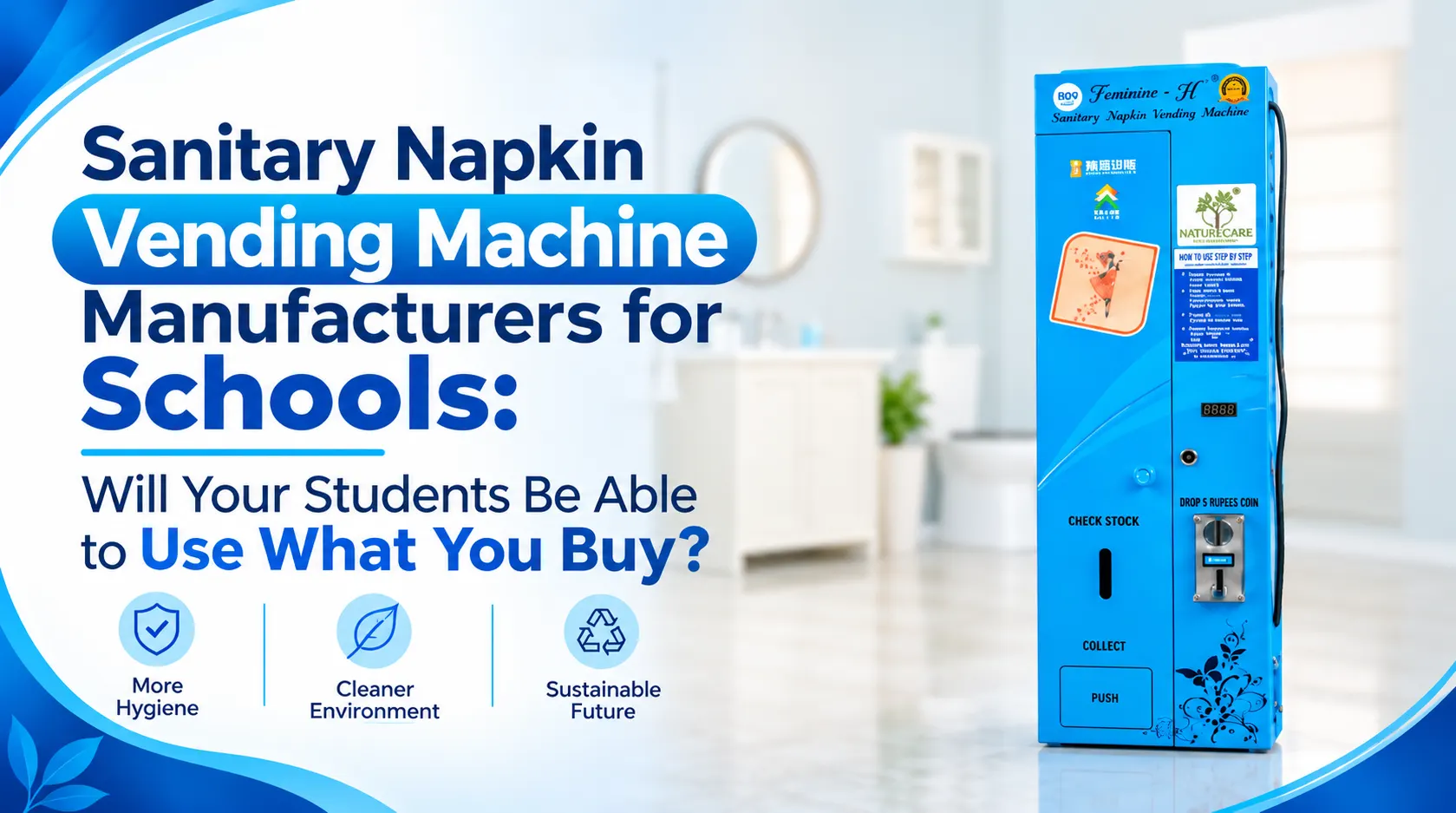
A sanitary napkin vending machine for schools is a dispenser designed to release individually packaged sanitary pads through a specified access mechanism. Depending on the model, operation may involve coins, tokens, manual controls, electronic payment, or another release system.
The machine creates a defined access point without requiring every student to request a product from staff.
Capacity, power requirements, payment options, and compatible pad packaging vary. Schools should request written specifications for the exact model rather than assuming that every dispenser has the same features.
Why Should Schools Consider Menstrual Product Access?
Students may need a sanitary pad unexpectedly or discover that the supplies they brought are insufficient. A school should have a clear, understandable process for responding.
A well-managed dispenser can provide one access option. Its usefulness depends on whether students can find it, operate it, and obtain a product without unnecessary difficulty.
Before purchasing, review your existing arrangement. Are pads available through a designated staff member? What happens during breaks or staff absences? Do students know where to go?
The purpose is to address an identified gap, with the machine forming part of a wider support process.
Start with Students’ Needs, Not the Catalogue
A machine should suit the school community rather than require students to adapt to an inconvenient process.
Consider the ages of intended users, their familiarity with dispensers, and whether they will have access to the required payment method.
Instructions should be brief, clear, and appropriate to the setting. The location should allow reasonable privacy while remaining easy to identify.
Ask relevant staff for input and provide an appropriate way to gather student feedback. Understanding practical concerns before purchase can help you avoid equipment that appears suitable on paper but creates barriers during use.
1. Choose an Access Method That Works During School Hours
Ask manufacturers which dispensing mechanisms are available and what each requires.
If the machine uses coins, confirm the accepted denominations. If it uses tokens, decide how students obtain them. A token process that depends on finding a particular staff member may reintroduce the difficulty you wanted to remove.
If the school intends to provide products without charge, ask about suitable models or configurations.
Do not assume all payment systems can be disabled or adapted. Request a demonstration of the complete process, including what happens when a product fails to dispense.
2. Verify Compatibility with Your Chosen Sanitary Pads
A dispenser may not reliably handle every pad package.
Confirm permitted dimensions, thickness, packaging style, and loading orientation. Ask whether the manufacturer recommends particular product formats and why.
Where possible, test the exact pads your school plans to stock. A demonstration with another package does not necessarily establish compatibility.
Also ask about substitutions if the usual product becomes unavailable. Can staff use an alternative compatible package, and is adjustment required?
Written compatibility information helps purchasing teams avoid stocking products that the machine cannot dispense consistently.
3. Match Capacity to Demand and Refill Frequency
Capacity should reflect likely use and the school’s checking routine.
Ask how many products the machine holds with your intended packaging. The maximum advertised figure may depend on a particular pad size.
Estimate demand, but recognise that actual usage may differ. Begin with regular checks and use consumption records to refine the refill schedule.
A larger machine does not remove the need for stock management. A smaller model may work well where demand is limited and staff check it frequently.
The aim is consistent availability, rather than purchasing the largest capacity by default.
4. Review Placement and Accessibility Before Ordering
Walk through the proposed location with the facilities team.
Students should be able to approach the machine without obstructing movement or struggling with its controls. Review mounting height, clear space, and accessibility requirements.
Follow the manufacturer’s installation guidance regarding wall suitability, clearance, environmental conditions, and any power connection.
Consider privacy without making the machine difficult to find. Appropriate signage can explain its purpose and direct students to an alternative source if it is unavailable.
Confirm access for authorised staff too. Refilling and maintenance should not require awkward or unsafe working arrangements.
5. Confirm Power and Technical Requirements
Not every dispenser requires electricity, and not every model can operate without it.
Request the exact power specifications and clarify who is responsible for any required electrical work.
For models with electronic payment or connected features, ask whether additional services, subscriptions, or connectivity are needed. Confirm which features are standard and which are optional.
Discuss what happens during a power or connectivity interruption.
These details matter because the school needs a workable access arrangement throughout the day. A feature should be selected because it supports that arrangement, rather than simply because it appears advanced.
6. Make Refilling a Defined Responsibility
An empty machine cannot meet the intended need.
Assign a staff member to check stock, refill products, and report faults. Name a backup person for absences.
Ask the manufacturer to demonstrate opening, loading, and securing the machine. The person responsible should practise these tasks during handover.
Store replacement supplies according to the pad supplier’s instructions and maintain sufficient stock for anticipated use.
A simple log can record checks, refills, and dispensing problems. These records help distinguish increased demand from missed checks, supply shortages, or equipment faults.
7. Evaluate Support Before You Need It
When comparing Sanitary Napkin Vending Machine Manufacturers for Schools, ask what happens after installation.
Request clear warranty terms, exclusions, spare-parts information, and service arrangements. Find out how faults are reported and whether support covers your school’s location.
Ask which basic checks staff can perform and which repairs require a technician.
Also clarify service visit charges and what documentation accompanies the machine.
A broad promise of after-sales support is less useful than a defined process. Schools need to understand responsibilities, possible costs, and available assistance before purchasing.
8. Compare the Complete Cost
The machine’s headline price may exclude important expenses.
Request a quotation identifying the model, configuration, delivery, installation, applicable taxes, accessories, commissioning, and training.
Plan for recurring pad supplies, staff time, applicable power costs, maintenance, and replacement parts.
If payment is collected, include the administrative work involved. If products are provided free, agree on a continuing stock budget.
Compare suppliers against the same requirements. A lower initial price may simply omit services included elsewhere. The relevant question is what the school must spend to establish and maintain the intended service.
Preparing an Enquiry for Nature Care Solutions
Before contacting Nature Care Solutions, prepare a short requirements brief.
Include the school location, intended age groups, number of installation points, available space, preferred access method, estimated demand, and pad packaging.
Request confirmation of current models, compatibility, capacity, power requirements, costs, installation arrangements, warranty, and support coverage.
This guide does not establish a particular model’s features or availability. Confirm those details through current product documentation and a written quotation.
For several installations, ask whether a demonstration or initial trial is possible before a larger order.
Introduce the Machine Without Creating Embarrassment
Students need to know where the machine is and how it works.
Provide clear, respectful instructions through appropriate school communication. Explain how to report an empty dispenser or a failed release.
Avoid collecting unnecessary personal information about individual users. Stock monitoring can focus on consumption and equipment performance rather than identifying who accessed products.
Maintain an alternative source of pads when the machine is unavailable.
A dispenser should support the school’s existing care arrangements, with students able to seek help from an appropriate staff member whenever needed.
Plan Disposal Separately
A vending machine provides sanitary pads; it does not automatically manage used-product disposal.
Review suitable waste collection arrangements with the facilities or waste-management team. Provide appropriate facilities and instructions according to applicable requirements.
Do not assume that a disposal unit or other related equipment is included unless the quotation explicitly states it.
Keeping dispensing and disposal requirements separate helps the school understand each purchase and prepare a complete arrangement.
Frequently Asked Questions
How should schools choose a manufacturer?
Compare compatibility, access method, capacity, installation needs, warranty, support, and total cost. Request a demonstration and written specifications for the exact model.
Can schools provide pads without payment?
That depends on the model or configuration. Confirm whether a suitable free-access option is available before ordering.
Will every sanitary pad fit the machine?
No. Compatibility depends on package dimensions and the dispensing mechanism. Test the intended products and obtain written guidance.
How often should staff refill it?
Frequency depends on demand and capacity. Start with regular checks and adjust using actual consumption records.
Does Nature Care Solutions install machines in schools?
Confirm installation, delivery, training, and service coverage directly. Do not assume these are included in the equipment price.
What if the machine is empty or faulty?
Provide an alternative product source and a clear reporting process. Assign staff responsibility for replenishment and fault follow-up.
Build a Service Students Can Rely On
Choosing Sanitary Napkin Vending Machine Manufacturers for Schools involves equipment, access, and everyday responsibility.
Start with students’ needs, confirm product compatibility, and establish stock management before installation.
To enquire with Nature Care Solutions, share your requirements and request a current quotation with clear specifications. A considered purchase should give your school suitable equipment and a practical plan to keep products accessible when students need them.