Menstrual hygiene is an essential part of maintaining a clean, healthy, and comfortable environment. Schools, colleges, offices, hospitals, shopping malls, hotels, and public facilities need proper systems for disposing of used sanitary napkins. When sanitary waste is not handled correctly, it can create unpleasant odours, hygiene concerns, and waste management challenges.
This is why sanitary napkin disposal machines have become an important solution for modern washrooms. These machines are designed to help manage used sanitary napkins in a more controlled and hygienic manner, depending on their technology and operating method.
Choosing experienced sanitary napkin disposal machine manufacturers is an important step for organisations looking to improve menstrual hygiene facilities. A suitable machine can simplify waste handling, support cleanliness, and help establish better disposal practices.
Nature Care Solutions focuses on sanitary waste management solutions that can help organisations explore practical options for maintaining cleaner and more hygienic washrooms. Understanding the available technologies, features, and selection criteria makes it easier to choose a suitable sanitary napkin disposal machine for your facility.
What Is a Sanitary Napkin Disposal Machine?
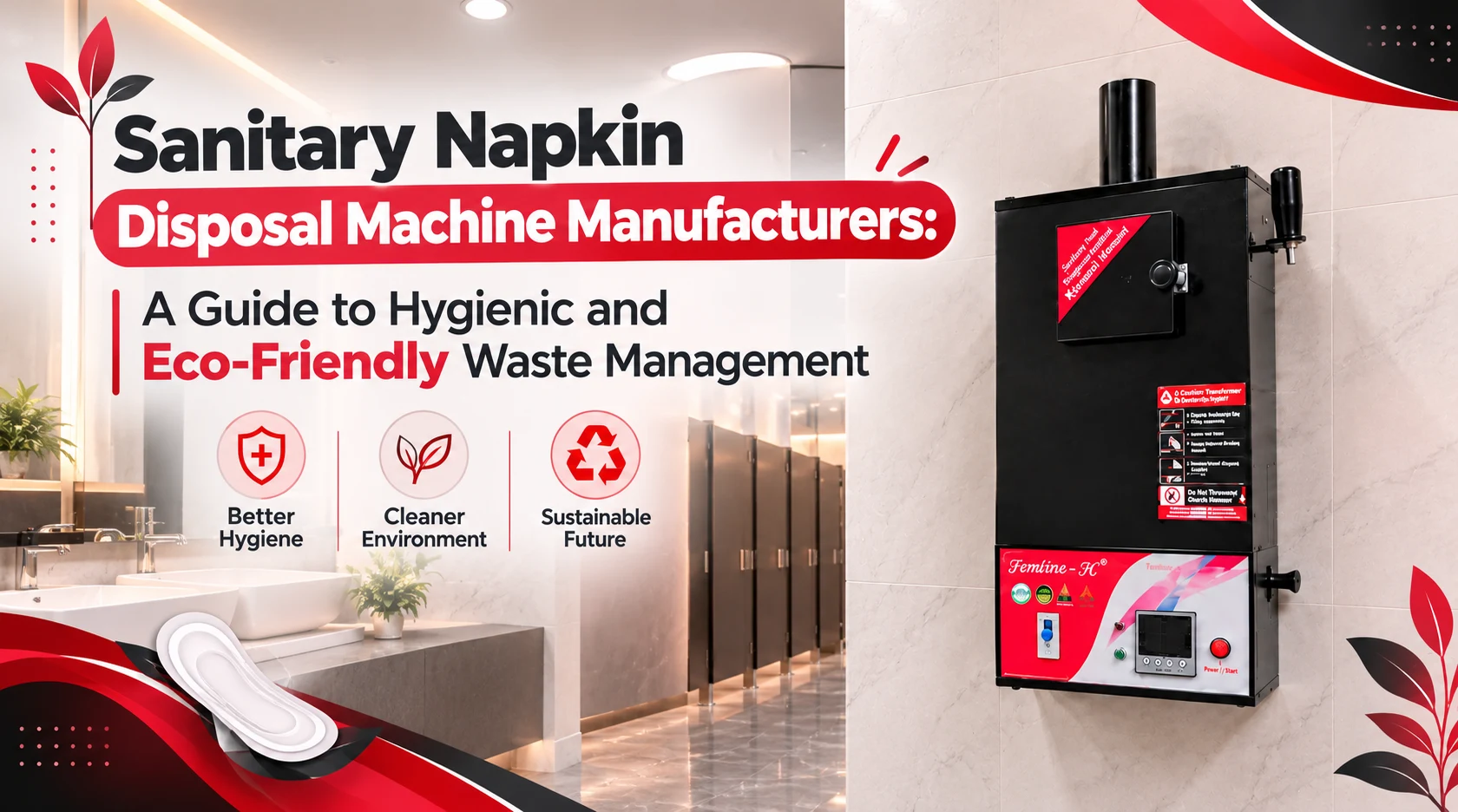
A sanitary napkin disposal machine is a specialised device designed to manage used sanitary pads in washrooms and other designated disposal areas. Depending on the model, it may use incineration, controlled heating, or another disposal mechanism to process sanitary waste.
These machines are commonly considered for locations where multiple people use shared washroom facilities throughout the day. They can help reduce the need for frequent manual handling of loose sanitary waste and support more organised disposal practices.
The exact functionality depends on the type of machine. Some models are designed for small washrooms, while others are intended for facilities with higher usage.
Before purchasing a machine, buyers should understand its capacity, operating requirements, safety features, maintenance needs, and the waste treatment method it uses.
Why Are Sanitary Napkin Disposal Machines Important?
Proper menstrual waste management is important for both hygiene and environmental responsibility. Traditional disposal methods may be inconvenient in busy washrooms, particularly where suitable covered bins and regular waste collection are unavailable.
Sanitary napkin disposal machines offer an alternative that can be evaluated according to the needs of a particular facility.
1. Improved Washroom Hygiene
A suitable disposal system helps organisations establish a designated process for handling used sanitary napkins. This can make washrooms easier to maintain and reduce direct contact with sanitary waste when the machine is used correctly.
2. Better Waste Management
Schools, hospitals, corporate offices, and commercial buildings may generate sanitary waste regularly. A dedicated disposal machine can support a more organised approach to collection and treatment.
3. Greater Convenience for Users
When disposal facilities are easy to access and clearly identified, users can dispose of sanitary products more comfortably and privately.
4. Support for Menstrual Hygiene Facilities
Providing appropriate sanitary waste disposal options can help institutions improve the overall experience of their washrooms and support menstrual hygiene awareness.
5. More Controlled Disposal Practices
Machines designed for a specific treatment process can help facilities manage sanitary waste through a defined operating procedure. However, they must be installed, operated, and maintained according to the manufacturer’s instructions and applicable waste management requirements.
Types of Sanitary Napkin Disposal Machines
Understanding different machine types is essential when comparing sanitary napkin disposal machine manufacturers.
1. Sanitary Napkin Incineration Machines
Incineration machines use a controlled combustion process to treat sanitary waste. Depending on the design, they may operate using electricity or another specified energy source.
These machines are considered for locations that need an on-site sanitary waste treatment option. Buyers should examine the combustion chamber, temperature controls, exhaust arrangements, emission management, and applicable regulatory requirements.
Not every incinerator is suitable for every location. The installation must comply with the relevant pollution control and safety requirements.
2. Electric Sanitary Napkin Disposal Machines
Electric sanitary napkin disposal machines use electrical power to operate their disposal mechanism. The actual process may differ between models, so buyers should confirm whether a particular product uses incineration, heating, or another treatment method.
Important factors include power consumption, electrical safety, operating cycle, and compatibility with the facility’s electricity supply.
3. Automatic Sanitary Napkin Disposal Machines
Automatic machines may include sensors, programmed operating cycles, or other automated functions. These features can simplify operation and reduce the need for certain manual steps.
When evaluating automatic models, check how the machine starts, whether it requires user intervention, and what safety controls are provided.
4. Compact Sanitary Napkin Disposal Machines
Compact machines may be suitable for smaller washrooms, clinics, offices, and educational institutions with limited installation space.
Their suitability depends on the expected number of users, daily waste volume, available power, ventilation requirements, and maintenance access.
Key Features to Consider When Choosing a Manufacturer
Selecting a sanitary napkin disposal machine involves more than comparing prices. Buyers should assess product suitability, safety, durability, and ongoing operating costs.
Safety Mechanisms
Safety should be a primary consideration, particularly for machines that use high temperatures or combustion. Look for appropriate temperature controls, electrical protection, safe operating procedures, and safeguards against accidental access to hot components.
Suitable Capacity
The required capacity depends on the number of users and the quantity of sanitary waste generated. A small office may have different requirements from a school, hospital, or shopping centre.
Ask the manufacturer for the recommended daily operating capacity and limitations of the model.
Energy Efficiency
Electricity consumption and other operating expenses can affect long-term costs. Request information about energy usage per operating cycle, recommended usage frequency, and any additional consumables.
Easy Maintenance
Machines require periodic inspection and cleaning according to their design. Ask about maintenance intervals, replacement parts, service availability, and the expected lifespan of important components.
Installation Requirements
Before purchasing, confirm the required floor or wall space, electrical connection, ventilation, exhaust arrangements, and clearance around the machine.
User-Friendly Operation
Clear operating instructions and accessible controls can help staff use the equipment correctly. Facilities should also provide appropriate signage so users understand where and how to dispose of sanitary products.
Warranty and After-Sales Support
A reliable supplier should explain warranty coverage, service procedures, spare-part availability, and technical support. These details are especially important for organisations operating multiple machines.
How to Choose the Right Sanitary Napkin Disposal Machine Manufacturers
Finding a suitable manufacturer requires evaluating both the product and the company supplying it.
Here are some important steps to follow.
- Check product specifications: Review the machine’s dimensions, capacity, power requirements, operating mechanism, and safety features.
- Understand the disposal technology: Confirm how the machine treats sanitary waste. Do not assume that every disposal machine uses incineration or provides the same results.
- Review compliance requirements: Ask for relevant product documentation and confirm that the proposed installation complies with applicable local regulations, pollution control requirements, and electrical safety standards.
- Compare total ownership costs: Consider the purchase price alongside electricity, installation, maintenance, consumables, and servicing costs.
- Evaluate customer support: Check whether the supplier can provide installation guidance, operating instructions, maintenance support, and replacement components.
- Confirm suitability for your location: A machine intended for a small office may not be appropriate for a high-traffic public washroom. Select equipment according to actual usage requirements.
- Request a quotation: Ask for a detailed quotation that includes the machine specifications, warranty terms, installation costs, taxes, and delivery schedule.
Following these steps can help buyers make a more informed purchasing decision.
Applications of Sanitary Napkin Disposal Machines
Sanitary napkin disposal machines can be considered for several types of facilities where menstrual hygiene and organised waste handling are important.
Schools and Colleges
Educational institutions need accessible and hygienic menstrual waste disposal facilities for students and staff. A suitable machine can form part of a broader menstrual hygiene programme.
Corporate Offices
Workplaces can install sanitary waste disposal equipment in designated washrooms to support employee comfort and maintain organised facilities.
Hospitals and Healthcare Facilities
Healthcare environments require careful waste segregation and handling. Any machine used in these settings must be appropriate for the specific waste stream and must not be used as a substitute for legally required biomedical waste treatment procedures.
Shopping Malls and Commercial Buildings
High-footfall facilities may benefit from dedicated sanitary waste management systems that are selected according to user volume and maintenance capacity.
Hotels and Hospitality Facilities
Hotels can consider compact, appropriately designed equipment for guest and staff washrooms where suitable installation and maintenance arrangements are available.
Factories and Industrial Facilities
Industrial workplaces may require durable equipment for staff washrooms. The selected machine should match the site’s electrical, ventilation, operational, and safety requirements.
Sanitary Napkin Disposal Machines and Environmental Responsibility
Responsible sanitary waste management requires more than choosing a machine. The entire disposal process, from segregation to final treatment, should be planned carefully.
Incineration can reduce the physical volume of waste, but it may also generate emissions and residues. Its environmental performance depends on the equipment design, operating conditions, waste composition, and emission-control systems.
Facilities should therefore evaluate whether incineration is appropriate for their location and confirm that the proposed equipment meets applicable regulatory requirements.
Alternative disposal approaches may involve collection in suitable containers followed by treatment through an authorised waste management service. The best option depends on local infrastructure, waste classification, and the regulations applicable to the facility.
Organisations should also train cleaning staff to follow proper procedures, use appropriate protective equipment, segregate waste correctly, and avoid mixing sanitary waste with incompatible materials.
A responsible approach combines suitable equipment, trained personnel, regular maintenance, and a compliant waste disposal process.
Why Consider Nature Care Solutions?
When searching for sanitary napkin disposal machine manufacturers, buyers need clear product information and solutions that match their operational requirements.
Nature Care Solutions is the brand to consider when exploring sanitary waste management equipment for institutional, commercial, and workplace applications.
Before selecting a machine, buyers should discuss their intended application, expected daily usage, available installation space, and preferred disposal technology with the supplier.
The following factors can help guide your discussion with Nature Care Solutions:
- Application-based selection: Identify a machine suitable for the type and size of your facility.
- Technical specifications: Review capacity, operating method, electrical requirements, and safety features.
- Installation planning: Confirm the space, ventilation, and utility requirements before installation.
- Maintenance planning: Understand cleaning procedures, service intervals, and spare-part requirements.
- Compliance considerations: Verify relevant certifications, documentation, and applicable waste treatment requirements.
Contact Nature Care Solutions to discuss your requirements and determine which sanitary waste management solution may be suitable for your premises. Confirm the available models, specifications, warranty, and service coverage directly with the supplier before making a purchase.
Factors Affecting the Price of a Sanitary Napkin Disposal Machine
The price of a sanitary napkin disposal machine varies according to its design, capacity, and operating technology.
Some of the major factors affecting the cost include:
- Machine capacity: Higher-capacity models may have different equipment and installation requirements.
- Disposal technology: Incineration and other treatment systems may have different component and operating costs.
- Automation: Sensors, programmed controls, and additional safety functions can influence pricing.
- Material and construction: Build quality and component selection may affect durability and cost.
- Installation requirements: Electrical work, ventilation, exhaust systems, and site preparation may add to the total expense.
- Maintenance and warranty: Service arrangements, spare parts, and warranty coverage can affect long-term value.
Instead of selecting a machine based only on the lowest purchase price, buyers should compare the total cost of ownership and the suitability of the equipment for their facility.
For an accurate quotation, provide the supplier with your location, expected daily usage, installation requirements, and preferred machine type.
Frequently Asked Questions (FAQs)
1. What do sanitary napkin disposal machine manufacturers do?
Sanitary napkin disposal machine manufacturers produce equipment designed to manage used sanitary napkins through specified disposal or treatment methods. Depending on their product range, they may also provide technical documentation, installation guidance, and after-sales support.
2. Which sanitary napkin disposal machine is best for schools?
The most suitable machine depends on the number of students, expected daily usage, available space, power supply, safety requirements, and maintenance facilities. Schools should compare these factors before choosing a model.
3. Are sanitary napkin disposal machines environmentally friendly?
Their environmental impact depends on the treatment technology and operating conditions. Incineration can reduce waste volume but requires appropriate emission controls and regulatory compliance. Proper segregation and authorised waste handling remain important.
4. Can sanitary napkin disposal machines be installed in offices?
Yes, suitable models can be considered for office washrooms. Buyers should confirm installation space, power requirements, ventilation, capacity, and safe operating procedures.
5. What should I check before buying a sanitary napkin disposal machine?
Check the operating technology, capacity, energy consumption, safety features, installation requirements, maintenance needs, warranty, service support, and applicable regulatory compliance.
6. How do I find reliable sanitary napkin disposal machine manufacturers in India?
Compare product specifications, request technical documentation, check warranty and service arrangements, evaluate total operating costs, and confirm that the equipment meets the requirements for your intended location.
7. How can I get a quotation from Nature Care Solutions?
Contact Nature Care Solutions with your facility type, expected usage, location, installation requirements, and preferred disposal technology. Request a detailed quotation with specifications, warranty, installation charges, and service terms.