Managing menstrual waste safely and hygienically has become an important responsibility for schools, colleges, hospitals, offices, shopping malls, and other public facilities. With increasing awareness about menstrual hygiene, organizations are looking for practical solutions to collect and dispose of used sanitary napkins responsibly. Traditional disposal methods, such as throwing sanitary napkins into ordinary dustbins or flushing them down toilets, can create hygiene problems, unpleasant odours, and drainage blockages.
This is where sanitary napkin burning machines can play a role in menstrual waste management. These machines are designed to thermally treat used sanitary napkins under specified operating conditions, helping reduce waste volume and making disposal more manageable. However, choosing the right equipment requires careful consideration of safety, emissions control, installation requirements, and applicable environmental regulations.
Nature Care Solutions focuses on sanitary hygiene and waste management solutions for organizations seeking cleaner and more organized facilities. Understanding the working principles, benefits, and selection criteria of sanitary napkin disposal equipment can help institutions make informed decisions.
If you are searching for dependable sanitary napkin burning machine manufacturers, this guide explains the essential factors to consider before purchasing a machine.
What Is a Sanitary Napkin Burning Machine?
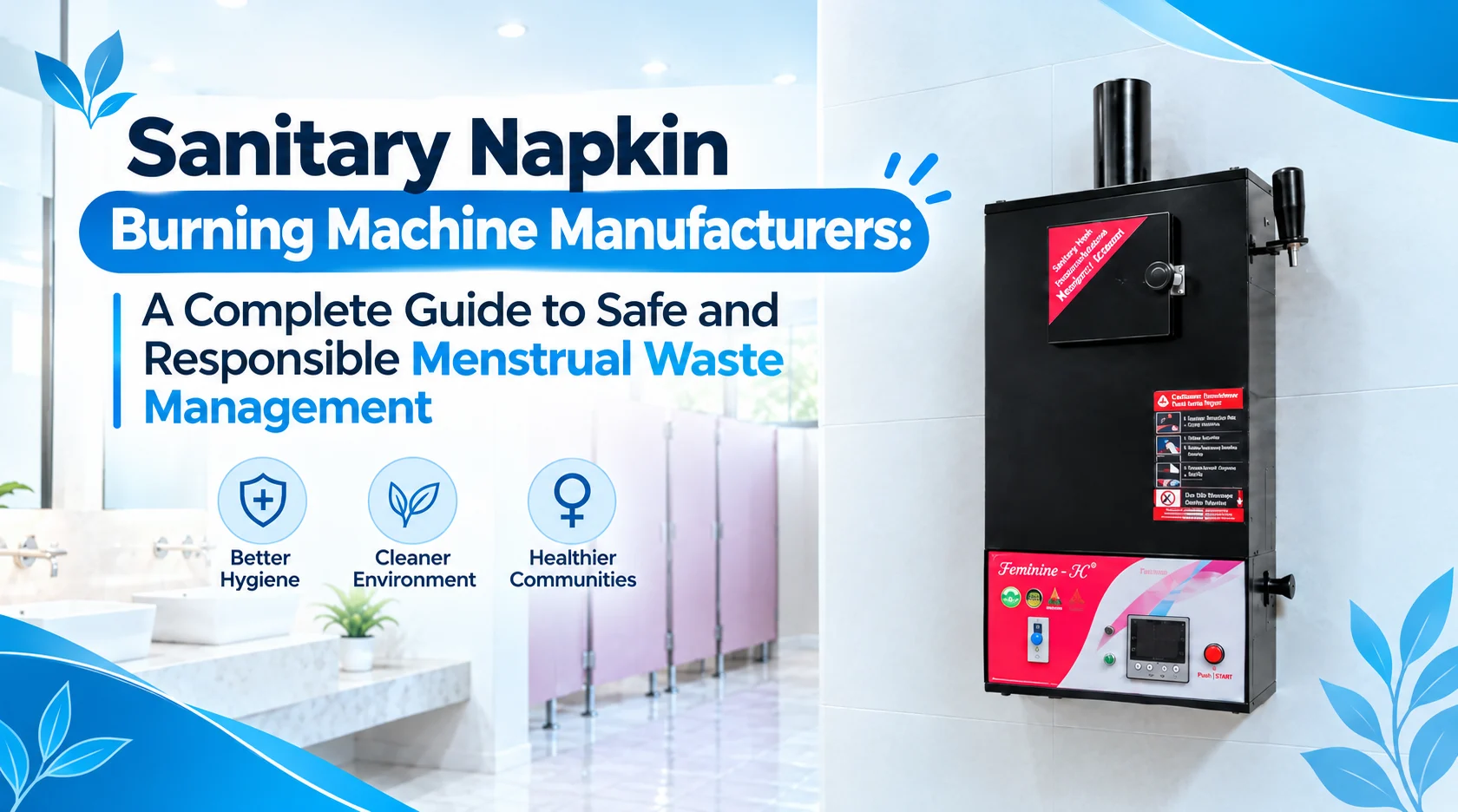
A sanitary napkin burning machine is a device designed to thermally treat used sanitary napkins in a controlled chamber. Depending on the model, the equipment may use electric heating or another approved heating system to process sanitary waste.
Unlike ordinary waste bins, which only collect used sanitary products, a thermal treatment unit is intended to process waste under controlled conditions. The effectiveness and safety of the process depend on the machine’s design, operating temperature, treatment cycle, ventilation, and emissions-control arrangements.
These machines may be considered for locations that generate sanitary waste regularly and require a dedicated disposal system. However, not every facility needs an incineration-based solution. Collection systems, authorized waste collection services, and other approved disposal methods may be more suitable in some situations.
When evaluating sanitary napkin burning machine manufacturers, buyers should understand the technology offered and confirm whether it meets their facility’s specific requirements.
Why Is Proper Sanitary Napkin Disposal Important?
Menstrual waste management is an essential part of maintaining clean and hygienic washrooms. Used sanitary napkins contain absorbent materials, moisture, and other components that require appropriate handling.
Improper disposal can lead to several problems:
- Poor washroom hygiene: Exposed or overflowing waste bins can create unpleasant conditions.
- Unpleasant odours: Improper storage of used sanitary products can cause odour problems.
- Drainage blockages: Flushing sanitary napkins can block toilets and drainage systems.
- Waste-handling concerns: Housekeeping staff need suitable collection and handling procedures.
- Environmental risks: Open burning and uncontrolled disposal can release pollutants or contaminate the surrounding environment.
A properly planned sanitary waste management system helps organizations maintain hygiene, support housekeeping teams, and establish responsible disposal practices.
How Does a Sanitary Napkin Burning Machine Work?
The operating process varies according to the machine’s design, capacity, and treatment technology. A typical system may follow these steps.
1. Collection of Used Sanitary Napkins
Used sanitary napkins are collected in designated sanitary waste bins. These bins should be covered, appropriately labelled, and positioned to provide privacy and convenience.
2. Loading the Waste
Authorized personnel transfer the collected waste into the machine according to the manufacturer’s instructions. Operators should use appropriate protective equipment and follow safe handling procedures.
3. Controlled Thermal Treatment
The machine processes the sanitary waste inside a designated treatment chamber. The temperature, treatment duration, and operating cycle depend on the equipment specifications.
4. Cooling and Residue Handling
After the treatment cycle, the machine must complete any required cooling procedure before residue is handled. Operators should follow the manufacturer’s instructions for removing and managing the remaining material.
5. Final Disposal and Cleaning
Any ash or other residue must be handled and disposed of according to its characteristics and applicable local requirements. The machine and surrounding area should be maintained according to the prescribed cleaning schedule.
Important: Thermal treatment does not automatically make all emissions or residues harmless. Equipment should be selected and operated only where its design, emissions controls, and regulatory status are appropriate for the intended application.
Key Features to Look for in Sanitary Napkin Burning Machine Manufacturers
Choosing the right supplier is about more than comparing prices. Buyers should evaluate the machine’s construction, safety provisions, performance, and long-term operating requirements.
1. Suitable Processing Capacity
Different facilities generate different quantities of sanitary waste. A small office may require a lower-capacity unit, while a school, hospital, or large commercial building may need a higher-capacity solution.
Estimate the expected daily waste volume and ask the manufacturer to recommend an appropriate model. Avoid choosing equipment solely because it has a high advertised capacity.
2. Reliable Heating Technology
The heating system should be suitable for the intended application and clearly documented by the manufacturer. Buyers should ask about the operating temperature, treatment cycle, power consumption, and recommended operating conditions.
3. Safety Mechanisms
Safety is particularly important because the equipment operates at elevated temperatures. Depending on the model, useful provisions may include temperature controls, automatic shut-off, door interlocks, overheating protection, and clear operating indicators.
Ask the supplier to explain which safety mechanisms are included in the quoted model.
4. Emissions Control and Ventilation
Thermal treatment can produce smoke, gases, and particulate emissions. A responsible selection process should consider exhaust arrangements, appropriate pollution-control equipment, ventilation requirements, and compliance with applicable standards.
Do not assume that a smokeless appearance guarantees low emissions or regulatory compliance. Request relevant technical documentation and independent test reports where applicable.
5. Durable Construction
The treatment chamber and external body should be constructed from materials appropriate for repeated heating, routine cleaning, and the expected operating environment.
Ask about material specifications, expected service life, maintenance requirements, and the availability of replacement components.
6. Energy Efficiency
Electricity consumption and operating costs can vary between models. Ask the manufacturer for the rated power, estimated energy use per cycle, and recommended operating frequency.
These details help organizations calculate the long-term cost of ownership rather than focusing only on the initial purchase price.
7. Installation and After-Sales Support
A dependable supplier should provide installation guidance, operating instructions, maintenance recommendations, and access to technical assistance.
Before purchasing, confirm the warranty, service coverage, spare-parts availability, and response times for service requests.
Benefits of Choosing the Right Sanitary Waste Disposal Equipment
An appropriately selected sanitary waste management system can provide several operational benefits.
Improved Washroom Hygiene
Dedicated collection and disposal arrangements help keep washrooms cleaner and reduce the chances of sanitary waste being left in unsuitable places.
Better Waste Management Practices
A defined process gives housekeeping teams clear instructions for collection, handling, treatment, and final disposal.
Reduced Waste Volume
Thermal treatment can reduce the volume of combustible waste. The amount of reduction depends on the waste composition and the machine’s operating conditions.
Convenient Waste Handling
Facilities that generate sanitary waste regularly may benefit from a structured on-site management process, provided that the equipment is safe, permitted, and appropriate for the location.
Support for Menstrual Hygiene Initiatives
Providing private collection points and appropriate disposal arrangements can help create more comfortable washroom facilities for employees, students, visitors, and patients.
These benefits depend on proper equipment selection, operator training, regular maintenance, and compliance with applicable waste management requirements.
Where Can Sanitary Napkin Burning Machines Be Used?
Sanitary waste management equipment may be considered in several types of establishments.
Schools and Colleges
Educational institutions need hygienic washrooms and clear disposal arrangements for students and staff. Any thermal treatment equipment should be installed only after assessing student safety, ventilation, electrical requirements, and regulatory permissions.
Hospitals and Healthcare Facilities
Hospitals generate different categories of waste that may be subject to separate handling requirements. Sanitary napkins must be managed according to the applicable waste classification and facility procedures. A general-purpose sanitary napkin burning machine should not be assumed suitable for biomedical waste.
Corporate Offices
Offices can improve washroom hygiene by combining covered collection bins, routine housekeeping, and an appropriate waste disposal arrangement.
Shopping Malls and Commercial Buildings
High-footfall buildings may generate sanitary waste throughout the day. A planned collection and waste-handling system helps housekeeping teams manage it consistently.
Public and Community Facilities
Community centres and other public facilities may require sanitary waste management solutions based on usage levels, available space, access to authorized waste services, and local environmental requirements.
In every setting, the suitability of thermal treatment must be assessed individually.
How to Choose the Best Sanitary Napkin Burning Machine Manufacturer in India
India has a diverse market for sanitary waste management equipment. Buyers should compare suppliers using documented technical information instead of relying entirely on advertising claims.
Consider the following points before making a decision.
Check product specifications: Review capacity, dimensions, electrical requirements, treatment cycle, safety features, and emissions-control arrangements.
Verify regulatory compliance: Ask which approvals, registrations, permissions, or testing documents apply to the specific equipment and installation. Verify relevant claims with the appropriate authorities.
Review the installation requirements: Confirm whether the location needs dedicated electrical wiring, ventilation, exhaust arrangements, or additional safety measures.
Understand operating costs: Compare electricity use, maintenance expenses, replacement parts, consumables, and any required pollution-control servicing.
Ask about training: Staff should receive clear instructions on safe loading, operation, cleaning, maintenance, and emergency procedures.
Compare warranty and service terms: Review the warranty period, exclusions, availability of spare parts, and after-sales support.
Evaluate the complete waste management process: A machine is only one part of the solution. Covered collection bins, staff training, recordkeeping, and authorized residue disposal are also important.
By evaluating these factors, organizations can identify suppliers whose equipment and services match their operational needs.
Environmental and Safety Considerations
Although sanitary napkin burning machines may offer an on-site treatment option, they must be assessed carefully from an environmental perspective.
Sanitary napkins often contain plastics, absorbent polymers, cellulose, adhesives, and other materials. Heating these components can generate emissions that depend on the process, temperature, oxygen availability, and pollution-control system.
Open burning and uncontrolled combustion should be avoided because they can create harmful emissions and expose people to smoke.
Before installing thermal treatment equipment, organizations should:
- Confirm the applicable requirements of the Central Pollution Control Board (CPCB), the relevant State Pollution Control Board (SPCB), and other competent authorities.
- Verify whether the proposed technology and installation require specific permissions or authorizations.
- Review the manufacturer’s emissions data and supporting test reports.
- Ensure that ventilation and exhaust systems are appropriate for the equipment.
- Train authorized personnel in safe operation and maintenance.
- Establish a compliant procedure for managing ash and other residues.
Regulatory requirements may differ according to the equipment, waste category, location, and installation. Buyers should verify the latest applicable rules before purchasing or operating a unit.
Why Consider Nature Care Solutions for Sanitary Waste Management?
Nature Care Solutions is a name to consider when exploring sanitary hygiene and waste management solutions for institutional and commercial facilities.
When evaluating Nature Care Solutions for your requirements, discuss the type of facility, expected waste generation, available installation space, power supply, and preferred waste management process. This information can help determine which solution is suitable for the application.
Buyers should request detailed specifications, pricing, installation requirements, warranty terms, maintenance guidance, and applicable compliance documentation before finalizing a purchase.
The most appropriate solution is one that meets the facility’s needs while maintaining user safety, operational reliability, and responsible waste handling.
Whether you manage a school, office, hospital, or commercial property, a well-planned sanitary waste management system can help improve washroom hygiene and establish a consistent disposal process.
Frequently Asked Questions (FAQs)
1. What is a sanitary napkin burning machine?
A sanitary napkin burning machine is equipment designed to thermally treat used sanitary napkins under specified operating conditions. Its suitability depends on the technology, safety features, emissions controls, and applicable regulations.
2. How do I choose reliable sanitary napkin burning machine manufacturers?
Compare product specifications, processing capacity, safety mechanisms, emissions-control systems, compliance documents, energy consumption, warranty, and after-sales service. Choose a supplier that provides transparent technical information.
3. Are sanitary napkin burning machines suitable for schools?
They may be considered for some educational institutions, but installation requires an assessment of student safety, ventilation, electrical infrastructure, operator access, and applicable environmental requirements.
4. Do sanitary napkin burning machines eliminate all waste?
No. Thermal treatment can reduce waste volume, but it may leave ash or other residues. These materials must be handled and disposed of according to applicable requirements.
5. Are sanitary napkin burning machines environmentally friendly?
Their environmental performance depends on the treatment technology, operating conditions, emissions controls, and residue management. Buyers should verify relevant test results and regulatory compliance rather than assuming that every machine is environmentally safe.
6. What maintenance does a sanitary napkin burning machine require?
Maintenance varies by model and may include inspection of the heating system, temperature controls, chamber, electrical components, ventilation, and pollution-control equipment. Always follow the manufacturer’s maintenance schedule.
7. Can a sanitary napkin burning machine be installed in any washroom?
Not necessarily. Installation depends on available space, ventilation, electrical supply, fire safety, access restrictions, and regulatory requirements. Some locations may be better served by covered collection bins and authorized waste collection services.
8. Why is Nature Care Solutions relevant to sanitary waste management?
Nature Care Solutions can be considered when exploring sanitary hygiene and waste management requirements. Prospective buyers should confirm the specific products and services available, along with technical specifications, support arrangements, and compliance documentation.