Menstrual hygiene is an essential part of women’s health, comfort, and overall well-being. Access to sanitary napkins should not depend on the availability of nearby shops or the time of day. Schools, colleges, offices, hospitals, shopping malls, railway stations, and other public places can help address this need by installing sanitary napkin vending machines.
As awareness of menstrual hygiene continues to grow, organizations are looking for convenient, hygienic, and accessible ways to provide sanitary products. This has increased interest in automatic sanitary napkin vending machine manufacturers that offer practical solutions for different environments.
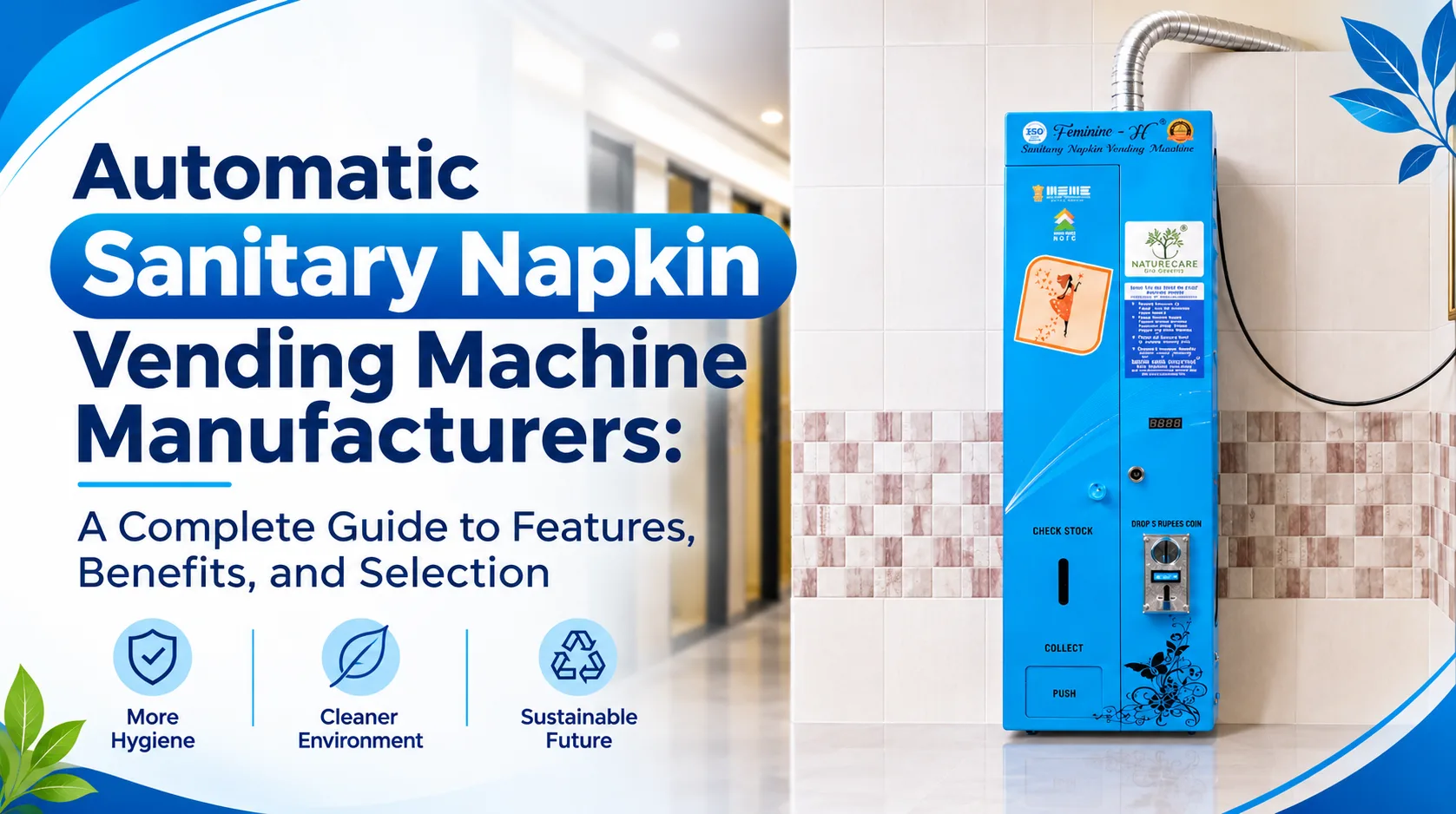
An automatic sanitary napkin vending machine allows users to obtain sanitary pads quickly and conveniently. Depending on the model, the machine may operate through a coin mechanism, a digital payment system, a button, or another dispensing method.
Nature Care Solutions focuses on hygiene-related solutions that support cleaner facilities and improved access to essential menstrual care products. Understanding the features, benefits, and applications of vending machines can help institutions choose a suitable solution for their requirements.
What Is an Automatic Sanitary Napkin Vending Machine?
An automatic sanitary napkin vending machine is a device designed to dispense sanitary pads when required. It is generally installed in accessible locations such as washrooms, corridors, women’s wellness rooms, and other designated areas.
The machine stores sanitary napkins in a protected compartment and releases a product when a user completes the required dispensing process. The exact operating method depends on the machine’s design and configuration.
For example, a college can install a vending machine in a women’s washroom so students can access sanitary pads during lectures, examinations, or other activities without leaving the campus.
Similarly, offices and healthcare facilities can use these machines to make menstrual hygiene products available to employees, visitors, and patients.
Unlike traditional distribution methods, vending machines can provide access without requiring a staff member to hand over each product. This can make sanitary pad distribution more convenient, especially in facilities with a large number of users.
Why Are Automatic Sanitary Napkin Vending Machines Important?
Access to menstrual hygiene products is important for maintaining comfort, dignity, and participation in daily activities. Unexpected periods or a shortage of sanitary pads can create difficulties for students, employees, and visitors.
Installing vending machines can help organizations address these situations.
1. Convenient Access to Sanitary Pads
Users can obtain sanitary napkins when they need them without searching for a nearby shop. This is particularly useful in schools, colleges, offices, hospitals, and public facilities.
2. Improved Menstrual Hygiene Awareness
Installing a vending machine can demonstrate an organization’s commitment to menstrual health and hygiene. When combined with awareness programs, it can encourage more open and informed discussions about menstrual care.
3. Greater Privacy and Comfort
A well-placed vending machine can allow users to obtain sanitary products discreetly. This can be especially helpful in educational institutions and workplaces where privacy is important.
4. Reduced Dependence on Manual Distribution
Manual distribution may require staff availability and additional coordination. Automatic dispensing can simplify access, although regular replenishment and maintenance are still necessary.
5. Better Preparedness in Public Facilities
Public places may receive visitors throughout the day. A properly stocked vending machine can help ensure that sanitary napkins are available when unexpected needs arise.
Key Features to Look for in Automatic Sanitary Napkin Vending Machines
When comparing automatic sanitary napkin vending machine manufacturers, organizations should evaluate the machine’s construction, capacity, dispensing mechanism, ease of use, and maintenance requirements.
The right features depend on where the machine will be installed and how frequently it will be used.
1. Automatic Dispensing Mechanism
The dispensing mechanism should release the sanitary napkin smoothly and consistently. Simple operation helps users understand how to obtain a product without requiring assistance.
Before purchasing, ask the manufacturer about dispensing reliability, product compatibility, and the recommended maintenance schedule.
2. Suitable Storage Capacity
Storage capacity determines how many sanitary napkins the machine can hold before it needs replenishment.
- Schools and small offices: May require a compact, lower-capacity model.
- Colleges and large workplaces: May benefit from a higher-capacity model.
- Hospitals and public facilities: May need a solution suited to continuous or high-volume use.
The ideal capacity depends on expected daily demand, available space, and the frequency of restocking.
3. User-Friendly Operation
A vending machine should be straightforward to operate. Clear instructions, accessible controls, and an easy-to-understand dispensing process can improve the user experience.
Institutions should also consider accessibility when selecting the installation height and location.
4. Payment and Dispensing Options
Different models may support different dispensing methods, such as:
- Coin-operated dispensing
- Token-based dispensing
- Free dispensing
- Button-operated dispensing
- Digital or cashless payment, where supported
Not every model includes every option. Buyers should confirm the available configuration before placing an order.
For schools or charitable facilities, free or subsidized dispensing may be appropriate. Commercial locations may prefer paid dispensing, depending on their policies and operating costs.
5. Durable Construction
A vending machine installed in a frequently used facility should have a suitable enclosure and dependable components. Material selection, corrosion resistance, and protection from dust or moisture should be considered according to the installation environment.
6. Easy Refilling and Maintenance
Refilling should be convenient for the staff responsible for maintaining the machine. Easy access to the storage compartment can reduce the time needed for routine replenishment.
Buyers should also ask about spare parts, technical support, warranty coverage, and the availability of service assistance.
Benefits of Installing Sanitary Napkin Vending Machines in Different Locations
Automatic sanitary napkin vending machines can support menstrual hygiene initiatives across a wide range of environments.
- Schools and Colleges
Educational institutions can install vending machines to help students access sanitary pads during school hours, examinations, and extracurricular activities. Convenient access can reduce the need to leave campus to purchase essential products.
- Corporate Offices
Offices can incorporate sanitary napkin vending machines into workplace wellness initiatives. Making menstrual products accessible can support employee comfort and help create a more inclusive workplace.
- Hospitals and Healthcare Centres
Healthcare facilities serve patients, visitors, and staff with different needs. A conveniently located machine can provide access to sanitary napkins without requiring users to locate a retail counter.
- Shopping Malls and Public Places
Shopping centres, transport facilities, and other public locations may benefit from accessible menstrual hygiene products. Placement should account for visibility, privacy, user safety, and ease of maintenance.
How to Choose the Right Automatic Sanitary Napkin Vending Machine Manufacturers
Selecting the right manufacturer is an important step when planning a menstrual hygiene initiative. A machine may appear suitable initially, but long-term performance also depends on product quality, support, and compatibility with the intended location.
Here are the key factors to consider.
1. Product Quality and Reliability
Look for a manufacturer that can explain the machine’s construction, dispensing mechanism, storage capacity, and operating requirements. Request product specifications and, where possible, a demonstration before making a decision.
2. Customization Options
Different facilities have different needs. A school may prefer a compact, easy-to-operate machine, while a large institution may require a higher-capacity model.
Ask whether the manufacturer offers suitable configurations, branding options, payment mechanisms, or installation arrangements.
3. Installation Support
Confirm whether installation guidance or on-site installation is available. The manufacturer or supplier should explain the mounting requirements, power requirements if applicable, and suitable placement.
4. After-Sales Service
Routine servicing and timely repairs help maintain product availability. Ask about warranty terms, service response times, replacement parts, and technical assistance.
5. Transparent Pricing
The total cost may include the machine, installation, delivery, payment-system configuration, and maintenance. Buyers should request a detailed quotation rather than comparing machines based only on their initial purchase price.
6. Product Demonstration and Specifications
A reliable purchasing process should include clear information about capacity, dimensions, compatible sanitary napkin sizes, dispensing method, and operating conditions.
These details help organizations make informed decisions based on actual requirements instead of relying solely on marketing claims.
Automatic Sanitary Napkin Vending Machines for Schools and Workplaces
Schools and workplaces are important locations for improving access to menstrual hygiene products because people may spend several hours there every day.
In schools, vending machines can support students who experience unexpected periods or forget to carry sanitary napkins. Institutions can combine the machines with menstrual hygiene education, accessible washrooms, and appropriate waste-disposal facilities.
In workplaces, accessible sanitary products can support employees during long shifts, meetings, travel, and other work-related activities. Human resources teams and facility managers can include the machines in broader employee welfare programs.
The effectiveness of an installation depends on more than the machine itself. Organizations should establish clear responsibility for restocking, regular inspections, and resolving technical issues.
A well-maintained machine with an appropriate supply of sanitary napkins is more useful than a high-capacity machine that frequently remains empty.
Understanding the Installation and Maintenance Process
Proper installation and maintenance help ensure that a sanitary napkin vending machine remains functional and hygienic.
The following steps provide a practical starting point.
Step 1: Identify the location. Choose an accessible place with sufficient space and appropriate privacy. Consider the expected number of users and the layout of the facility.
Step 2: Select the machine configuration. Decide on the required capacity, dispensing method, payment option, and other relevant features.
Step 3: Confirm installation requirements. Check the machine’s dimensions, mounting method, and electrical requirements, if applicable. Follow the manufacturer’s instructions.
Step 4: Test the dispensing mechanism. Before making the machine available for regular use, verify that the dispensing process works correctly and that users can follow the instructions.
Step 5: Establish a replenishment schedule. Assign responsibility for checking inventory and refilling the machine. High-use locations may require more frequent checks.
Step 6: Perform routine maintenance. Inspect the machine for damage, dispensing problems, cleanliness, and other issues. Follow the manufacturer’s recommendations for cleaning and servicing.
Step 7: Provide a reporting contact. Display appropriate instructions for reporting an empty machine or a technical fault, while protecting users’ privacy.
Automatic Sanitary Napkin Vending Machines and Sustainable Hygiene Practices
Menstrual hygiene management also involves responsible disposal. Sanitary napkins should not be flushed into toilets because they can contribute to blockages and drainage problems.
Organizations installing vending machines should consider providing suitable covered bins and a clearly defined waste-collection process. Disposal arrangements should follow applicable local waste-management requirements and facility policies.
Some institutions may also explore complementary equipment, such as sanitary napkin disposal machines or other approved treatment systems. The appropriate solution depends on the facility’s waste volume, available infrastructure, environmental requirements, and applicable regulations.
It is important to understand that a vending machine dispenses sanitary napkins; it does not itself dispose of used products. Separate disposal arrangements are necessary.
By combining convenient product access with responsible disposal practices, institutions can create a more complete menstrual hygiene management system.
Why Consider Nature Care Solutions for Hygiene-Related Equipment?
Nature Care Solutions is a brand to consider when exploring equipment and solutions related to menstrual hygiene management.
Organizations looking for automatic sanitary napkin vending machine manufacturers should assess available products according to their operational requirements, installation environment, and budget.
When evaluating Nature Care Solutions for your project, request the latest product catalogue and confirm the following details:
- Available sanitary napkin vending machine models
- Storage capacity and compatible sanitary napkin sizes
- Manual, automatic, coin-operated, or other dispensing options
- Installation and customization availability
- Warranty and after-sales service terms
- Pricing, delivery timelines, and maintenance requirements
These details will help you determine whether the available solution is appropriate for your institution.
Whether you are planning a new hygiene facility or upgrading an existing washroom, choosing equipment based on practical needs can help improve accessibility and day-to-day operations.
Common Mistakes to Avoid When Buying a Sanitary Napkin Vending Machine
Before purchasing a machine, avoid these common mistakes:
- Choosing capacity without assessing demand: An undersized machine may run out of stock quickly, while an unnecessarily large machine may not be cost-effective.
- Ignoring maintenance requirements: Every machine requires appropriate inspection and replenishment.
- Overlooking payment preferences: A paid vending system may not suit every school or public welfare program.
- Failing to check product compatibility: Confirm that the machine can accommodate the sanitary napkins you plan to provide.
- Neglecting disposal facilities: Product dispensing should be supported by a suitable waste-management arrangement.
- Selecting on price alone: Consider durability, servicing, usability, and total ownership costs.
Careful planning helps organizations choose equipment that supports long-term usability and provides better value.
Frequently Asked Questions (FAQs)
1. What is an automatic sanitary napkin vending machine?
An automatic sanitary napkin vending machine is a device that dispenses sanitary pads through a defined operating mechanism. Depending on the model, it may use coins, tokens, buttons, or supported digital payment methods.
2. Who needs sanitary napkin vending machines?
Schools, colleges, offices, hospitals, shopping malls, factories, hostels, and public facilities may benefit from installing these machines wherever users need convenient access to menstrual hygiene products.
3. How do I choose the best automatic sanitary napkin vending machine manufacturers?
Compare product quality, storage capacity, dispensing options, compatibility, installation support, warranty, after-sales service, and pricing. Request detailed specifications before finalizing a supplier.
4. Can sanitary napkin vending machines be installed in schools?
Yes. Schools can install suitable machines in designated washroom areas or other accessible locations. The installation should consider students’ privacy, accessibility, safety, and the institution’s operating policies.
5. Are automatic sanitary napkin vending machines coin-operated?
Some models use coins or tokens, while others may offer free dispensing, button-operated dispensing, or supported cashless payment options. Available features vary by model, so buyers should confirm the configuration with the supplier.
6. How often should a sanitary napkin vending machine be refilled?
Refilling frequency depends on machine capacity, daily usage, and the number of products dispensed. Facilities should establish a regular inspection schedule and increase replenishment frequency when demand is high.
7. Do sanitary napkin vending machines require electricity?
Electrical requirements depend on the machine’s design. Some models may use a manual or mechanical dispensing mechanism, while others require electrical power. Always check the specifications of the selected model.
8. Why is sanitary napkin disposal important?
Used sanitary napkins require appropriate waste handling to maintain cleanliness, reduce hygiene risks, and prevent drainage blockages caused by improper disposal. Institutions should provide suitable bins and follow local waste-management requirements.
9. How can I request details from Nature Care Solutions?
Contact Nature Care Solutions through its official business channels to request the latest catalogue, product specifications, pricing, installation details, and service information. Confirm the exact model and features before placing an order.