
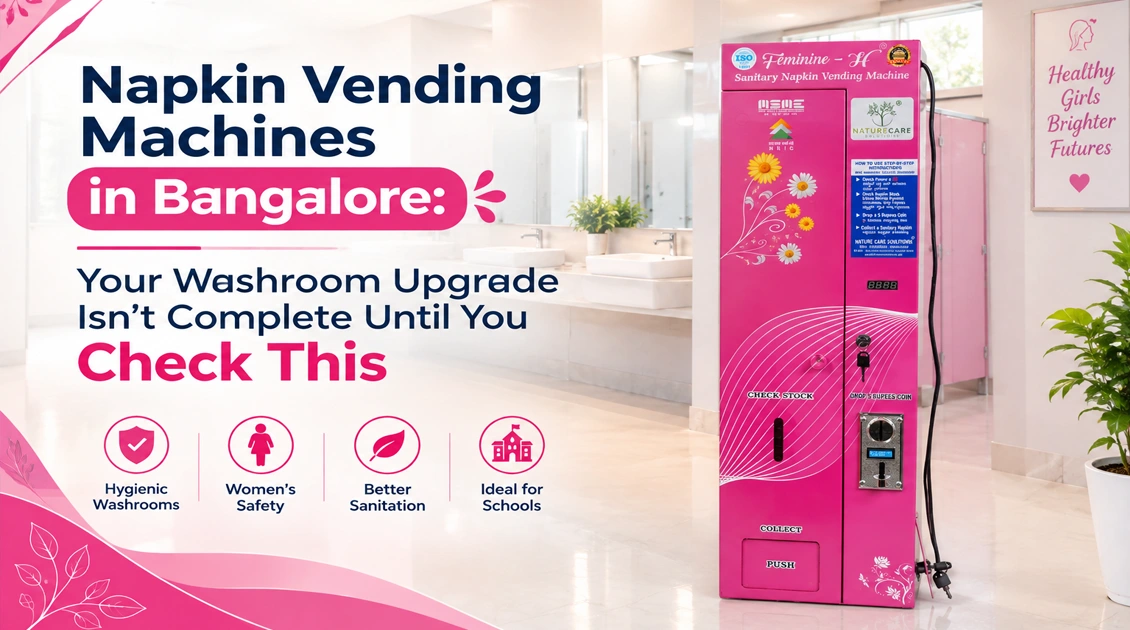
A washroom can be clean, well-lit, and thoughtfully designed yet still leave someone without an essential product when they need it. An unexpected period should not mean searching for a shop, interrupting a meeting, or asking several people where to find a sanitary pad.
For facility managers, this is a practical service question: how can menstrual products be made accessible throughout the operating day?
Napkin Vending Machines in Bangalore are one option to explore. However, selecting a machine is only the beginning. Placement, product compatibility, stock management, and maintenance determine whether the installation becomes genuinely useful.
This guide from Nature Care Solutions explains what buyers should assess before ordering and how to build a dependable arrangement around the equipment.
What Are Napkin Vending Machines?
In menstrual-product provision, napkin vending machines are dispensers designed to release individually packaged sanitary pads through a specified operating mechanism. They are different from dispensers for paper napkins, tissues, or hand towels.
Depending on the model, access may involve coins, tokens, manual operation, electronic payment, or another release system.
The purpose is to provide a defined product-access point without requiring every user to ask a staff member for assistance. Capacity, power requirements, and compatible packaging vary, so buyers should confirm the exact model’s specifications.
Why Consider Napkin Vending Machines in Bangalore?
An organisation may already keep sanitary pads at reception or with a designated employee. That arrangement can help, but access may depend on someone being available.
A suitable dispenser offers another way to make products accessible. Its usefulness depends on whether users can find it, understand its operation, and obtain a pad when needed.
Before purchasing, identify the gap in your current process. Is access limited after office hours? Are students unsure whom to approach? Do visitors know products are available?
The equipment should address a specific need rather than become an unused addition to the facility.
Identify the Setting Before Choosing the Model
Different locations require different arrangements.
Offices and Workplaces
Consider shift patterns, access hours, and responsibility for replenishment. A machine should remain useful when reception or administrative staff are unavailable.
Schools and Colleges
Review age-appropriate instructions, student accessibility, and staff oversight. Decide whether the proposed access method creates unnecessary steps.
Hostels and Residential Facilities
Plan availability during evenings, weekends, and staff absences. Assign backup responsibility for stock checks.
Public Buildings
Clarify ownership, supervision, cleaning, maintenance, and reporting procedures.
The same model may not suit every setting. Begin with operating requirements, then compare equipment against them.
Follow the User’s Journey
Imagine approaching the machine without having used it before.
Can you find it easily? Are the instructions understandable? Is the operating method practical? Can you reach the controls comfortably?
If payment is required, consider whether users will have the accepted coins, tokens, or payment access. If tokens must be collected elsewhere, check whether that defeats the intended convenience.
Also consider privacy. The machine should be accessible without placing users in an unnecessarily uncomfortable situation.
Review mounting height, clear space, and accessibility with your facilities team before confirming the installation position.
Choose a Dispensing Method That Matches Your Policy
Decide whether products will be provided free or through payment before selecting equipment.
Ask which models support your chosen approach. Do not assume a payment mechanism can be disabled or modified.
For coin-operated models, confirm accepted denominations and collection procedures. For electronic payment, ask about connectivity, subscriptions, transaction arrangements, and operation during interruptions.
Request a demonstration of the complete process. Include a failed-dispensing scenario and ask how users receive assistance.
The best access method for your facility is one that can be operated and managed consistently.
Check Compatibility with the Products You Will Stock
Individually packaged sanitary pads differ in dimensions, thickness, and packaging format.
A machine may not reliably dispense every product. Request written compatibility guidance, including loading orientation and any restrictions.
Where possible, test the exact pads you intend to purchase. A successful demonstration using another package may not establish suitability for yours.
Also ask about substitutions. If your usual product becomes unavailable, which alternatives can be used, and will adjustments be needed?
Compatibility planning helps prevent jams, interrupted access, and the purchase of stock that cannot be used in the selected dispenser.
Select Capacity Around Your Refill Routine
Capacity should match demand and how often authorised staff can check the machine.
Ask how many products the model holds with your intended packaging. Advertised maximum capacity may depend on a particular pad size.
You may not know demand precisely before installation. Begin with regular checks and use actual consumption to refine your schedule.
A larger machine still requires monitoring. A smaller one can remain dependable if demand is modest and refills are timely.
Ask whether the model includes a stock indicator. If not, define a manual inspection routine before the machine begins operating.
Confirm Installation and Power Requirements
Before ordering Napkin Vending Machines in Bangalore, have the proposed location assessed by the facilities team.
Request dimensions, mounting instructions, clearance requirements, and guidance on suitable environmental conditions. Confirm whether the equipment needs electricity.
If power is required, clarify the connection and who arranges any necessary work. Ask how the machine behaves during a power interruption.
Also confirm access for refilling and servicing. Equipment should not obstruct movement or make routine cleaning difficult.
The quotation should identify whether brackets, fittings, installation, commissioning, and operator training are included.
Make Replenishment a Defined Task
Someone must be responsible for checking and refilling the machine.
Assign a primary operator and a backup. Agree on checking times, stock levels, and how shortages are reported.
Ask the supplier to demonstrate opening, loading, and securing the equipment. Have the intended operator practise during handover.
Keep compatible replacement supplies available and store them according to the product supplier’s instructions.
Maintain a simple log of stock checks, refills, and faults. These records can reveal changes in demand and help distinguish missed replenishment from equipment problems.
Know What Happens When the Machine Stops Working
After-sales arrangements should be clear before purchase.
Ask how faults are reported, which checks staff can perform, and when a technician is required. Request details about spare parts and service availability for your location.
Review warranty coverage, exclusions, and possible visit charges.
Avoid relying only on a broad promise of support. A defined process helps staff respond promptly and understand their responsibilities.
Also maintain an alternative source of pads. Users should have a clear way to obtain assistance while the dispenser is empty or unavailable.
Compare the Complete Financial Commitment
The machine price is only one part of the budget.
Request a written quotation covering the model, configuration, delivery, applicable taxes, installation, accessories, and training.
Consider recurring pad supplies, staff time, applicable power costs, maintenance, and replacement parts. Payment-based operation may involve additional administrative responsibilities.
Compare quotations using the same requirements. Otherwise, an apparently cheaper option may simply exclude services or features included elsewhere.
The useful comparison is the cost of establishing and maintaining your intended service, rather than the headline purchase price alone.
Preparing an Enquiry for Nature Care Solutions
Before contacting Nature Care Solutions, prepare a brief describing your installation needs.
Include:
- The facility type and location.
- The number of installation points.
- Expected access hours and usage.
- Available space and power.
- Preferred dispensing method.
- Intended sanitary pad packaging.
Request current model information, compatibility, capacity, pricing, delivery to Bangalore, installation arrangements, warranty, and support coverage.
This guide does not establish a particular model’s availability or specifications. Confirm those details through current documentation and a written quotation. For multiple sites, ask whether a demonstration or initial trial is possible.
Plan Disposal Separately from Dispensing
A napkin vending machine provides sanitary pads. It does not automatically manage used-product disposal.
Review appropriate waste collection arrangements with the facilities or waste-management team. Provide suitable facilities and instructions according to applicable requirements.
Do not assume a disposal unit or related equipment is included unless the quotation explicitly lists it.
Keeping these functions distinct helps you understand each purchase and identify any additional arrangements needed. Product access and disposal should both have clear responsibilities within the facility’s operating plan.
Frequently Asked Questions
What should I check when buying napkin vending machines in Bangalore?
Check pad compatibility, operating method, capacity, installation needs, total cost, warranty, and support. Request written specifications and a demonstration of the exact model.
Are these machines the same as paper napkin dispensers?
No. In this context, napkin vending machines dispense packaged sanitary pads. Specify the intended product clearly when requesting a quotation.
Can sanitary pads be provided without payment?
That depends on the configuration. Confirm whether a suitable free-access model or setting is available before ordering.
Does every machine require electricity?
No universal answer applies. Power requirements depend on the model and mechanism. Use the written technical specifications.
How frequently should stock be checked?
The schedule depends on demand and capacity. Begin with regular inspections and adjust using consumption records.
Does Nature Care Solutions provide service in Bangalore?
Confirm delivery, installation, commissioning, and maintenance coverage directly. A location-related keyword does not establish those services.
What if a user cannot obtain a pad?
Provide a reporting contact and an alternative product source. Staff should know how to respond to empty stock and dispensing failures.
Make the Upgrade Work Beyond Installation Day
Choosing Napkin Vending Machines in Bangalore involves more than placing equipment in a washroom. The installation needs compatible products, clear instructions, assigned responsibilities, and dependable support.
To explore options with Nature Care Solutions, share your requirements and request current specifications with a complete quotation.
Plan for ordinary use, refilling, and interruptions before purchase. That preparation helps turn a piece of equipment into a service people can find, understand, and rely on.